
Our Latest Articles
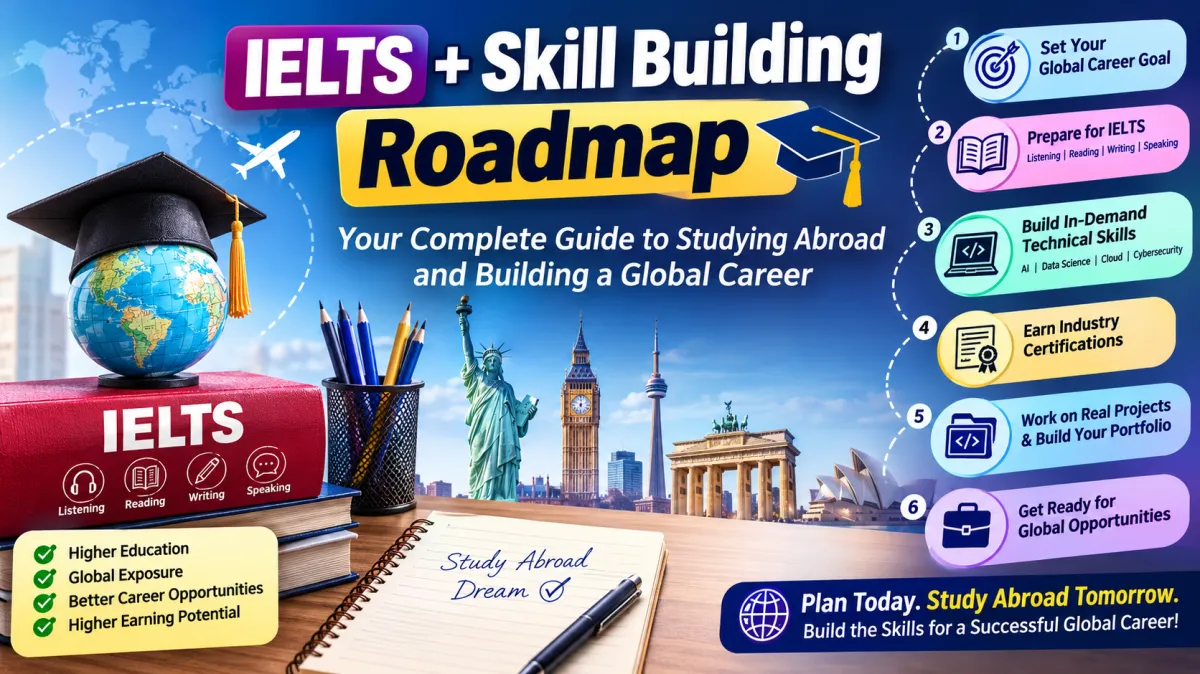
IELTS + Skill Building Roadmap: Your Complete Guide to Studying Abroad and Building a Global Career (2026)
Studying abroad is more than just getting admission to a university.
To succeed in today's competitive global job market, you need strong English communication skills and industry-relevant technical skills.
Many students focus only on IELTS preparation and forget about the skills employers are looking for after graduation.
The best strategy is to prepare for both IELTS and technical skill development simultaneously.
This roadmap will help you plan your journey from student to globally employable professional.
🎯 Why Combine IELTS with Skill Building?
A high IELTS score may help you secure admission, but it does not guarantee career success.
Employers value candidates who can:
✔ Communicate effectively in English
✔ Solve real-world problems
✔ Work with modern technologies
✔ Collaborate in multicultural teams
✔ Adapt to new environments
Combining language proficiency with technical skills gives you a significant advantage.
🚀 Step 1: Define Your Career Goal
Before starting your preparation, decide what career path interests you.
Popular technology career options include:
✔ Artificial Intelligence Engineer
✔ Data Analyst
✔ Data Scientist
✔ Software Developer
✔ Automation Test Engineer
✔ Cybersecurity Analyst
✔ Cloud Engineer
✔ DevOps Engineer
✔ Full Stack Developer
✔ Business Analyst
Choosing a clear goal helps you select the right courses, certifications, and projects.
📚 Step 2: Prepare for IELTS
The IELTS exam evaluates four language skills.
Listening
Practice:
✔ Understanding different English accents
✔ Note-taking
✔ Listening to podcasts and lectures
Reading
Develop:
✔ Reading speed
✔ Vocabulary
✔ Information scanning
✔ Understanding academic passages
Writing
Learn to write:
✔ Task 1 reports
✔ Task 2 essays
✔ Well-structured arguments
✔ Formal English
Speaking
Practice:
✔ Daily conversations
✔ Fluency
✔ Pronunciation
✔ Confidence
Target IELTS Scores
PurposeRecommended BandUndergraduate6.0–6.5Master's6.5–7.0Research Programs7.0–8.0
Always check the requirements of your chosen university.
💻 Step 3: Build Technical Skills
While preparing for IELTS, dedicate time each week to technical learning.
Artificial Intelligence
Learn:
✔ Python
✔ Machine Learning
✔ Prompt Engineering
✔ Generative AI
Data Analytics
Learn:
✔ Excel
✔ SQL
✔ Python
✔ Power BI
✔ Tableau
Software Development
Learn:
✔ HTML
✔ CSS
✔ JavaScript
✔ React
✔ APIs
Automation Testing
Learn:
✔ Selenium
✔ Playwright
✔ API Testing
✔ Git
Cybersecurity
Learn:
✔ Networking
✔ Linux
✔ Security Fundamentals
Cloud & DevOps
Learn:
✔ Docker
✔ Azure
✔ AWS
✔ Jenkins
✔ GitHub Actions
📜 Step 4: Earn Industry Certifications
Certifications validate your skills and strengthen your resume.
Popular options include:
✔ Google Career Certificates
✔ Microsoft Certifications
✔ AWS Certifications
✔ IBM Professional Certificates
✔ Coursera Specializations
Choose certifications that align with your career goals.
💼 Step 5: Build Real Projects
Projects demonstrate practical skills to employers.
Examples:
✔ AI Chatbot
✔ Sales Dashboard
✔ Automation Testing Framework
✔ Portfolio Website
✔ Spam Classification
✔ Expense Tracker
✔ Customer Churn Prediction
Document your projects clearly.
📂 Step 6: Create a GitHub Portfolio
A GitHub profile showcases your coding skills.
Include:
✔ Source code
✔ README files
✔ Screenshots
✔ Documentation
✔ Project videos (if applicable)
A well-maintained GitHub profile can make a positive impression during recruitment.
🌐 Step 7: Build Your LinkedIn Profile
LinkedIn is an important platform for networking and career opportunities.
Share:
✔ Projects
✔ Certifications
✔ Learning milestones
✔ Blogs
✔ Technical insights
Recruiters often review LinkedIn profiles before interviews.
📝 Step 8: Prepare Essential Documents
Start early with:
✔ Resume
✔ Statement of Purpose (SOP)
✔ Letters of Recommendation (LOR)
✔ Passport
✔ Academic transcripts
Organizing these documents in advance reduces stress during applications.
🏫 Step 9: Research Universities
Evaluate universities based on:
✔ Course curriculum
✔ Faculty
✔ Research opportunities
✔ Tuition fees
✔ Scholarships
✔ Internship opportunities
✔ Graduate employment outcomes
Choose institutions that match your academic and career goals.
💰 Step 10: Explore Scholarships
Scholarships can significantly reduce education costs.
Examples include:
✔ Government scholarships
✔ University scholarships
✔ Merit-based awards
✔ Research funding
✔ Country-specific scholarship programs
Always review eligibility criteria and application deadlines.
💬 Step 11: Improve Communication Skills
Strong communication is valuable both during studies and in the workplace.
Practice:
✔ Public speaking
✔ Presentation skills
✔ Email writing
✔ Professional conversations
These skills complement your IELTS preparation.
🤝 Step 12: Develop Soft Skills
Employers also value:
✔ Teamwork
✔ Leadership
✔ Critical thinking
✔ Time management
✔ Problem-solving
✔ Adaptability
These qualities are important for success in international environments.
📈 Step 13: Prepare for Technical Interviews
Interview preparation should include:
✔ Technical concepts
✔ Coding practice
✔ Project explanations
✔ Behavioral questions
Practice discussing your projects confidently.
🌍 Step 14: Understand Post-Study Career Opportunities
Research topics such as:
✔ Internship availability
✔ Graduate employment pathways
✔ Work visa policies
✔ Industry demand
Understanding these factors helps you make informed decisions about your study destination.
📅 Suggested 12-Month Roadmap
Months 1–3
✔ IELTS foundation
✔ English communication
✔ Python basics
✔ Career exploration
Months 4–6
✔ Technical courses
✔ Small projects
✔ Practice IELTS mock tests
Months 7–9
✔ Certifications
✔ Portfolio development
✔ LinkedIn optimization
✔ University shortlisting
Months 10–12
✔ IELTS exam
✔ Application submission
✔ SOP preparation
✔ Interview practice
❌ Common Mistakes Students Make
❌ Focusing only on IELTS
❌ Ignoring technical skills
❌ Building no portfolio
❌ Applying without research
❌ Starting preparations too late
🎯 Final Checklist
Before applying abroad, ensure you have:
✔ IELTS score
✔ Technical skills
✔ Industry certifications
✔ GitHub portfolio
✔ LinkedIn profile
✔ Resume
✔ SOP
✔ Projects
✔ Communication skills
🌟 Final Thoughts
Studying abroad is not just about earning a degree.
It is about preparing for a successful global career.
A strong combination of:
✔ English proficiency
✔ Technical expertise
✔ Practical projects
✔ Professional networking
can significantly improve your academic and career opportunities.
Start preparing early, stay consistent, and build skills that will remain valuable throughout your career.
📩 Need Guidance?
If you want support with:
✔ IELTS preparation
✔ Technical skill development
✔ Career roadmaps
✔ Study abroad planning
✔ Global internship opportunities
👉 Fill out the FutureTech Simulation Guidance Form:
https://forms.gle/SX9tWvc3tVJmPEHr5


Facebook
Instagram
X
LinkedIn
Youtube
WhatsApp